



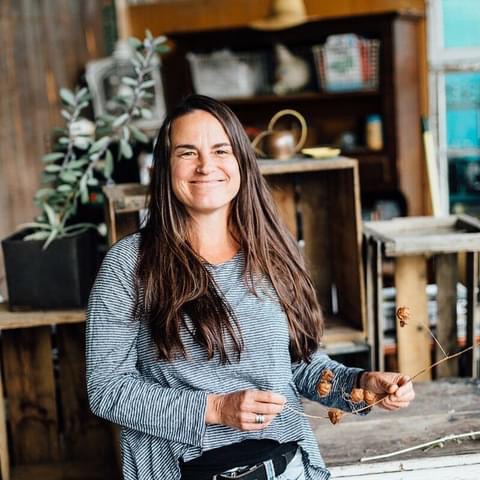
Today we’d like to introduce you to Nicole Ringgold.
Hi Nicole, so excited to have you on the platform. So before we get into questions about your work-life, maybe you can bring our readers up to speed on your story and how you got to where you are today?
I was a student who struggled to learn and thrive within the boundaries of mainstream education. I didn’t adequately learn to read until 5th grade when my mother thankfully forced me to sit in the kitchen every night to read out loud while she prepared dinner. When I did read proficiently I despised studying anything that required memorizing a text book. I highlighted hundreds but retained very few words or concepts. My notebooks were filled with elaborate doodles, and my teachers continuously remarked that my head was forever “in the clouds”.
In middle school I was pulled from class every week to work with a special education teacher who administered standardized achievement tests. She encouraged me to write creatively, play a musical instrument, and draw. She recognized and helped me understand that I was a gifted artist, and that being an artist was a form of intelligence. She ultimately changed my life, but at that time I was still floundering in the system.
My lifelong dream was to be an artist. However, to make a living as one I was told that I would have to teach art or have a second, more prominent job to generate income until my port folio was discovered. Even if discovered, there was no guarantee a salary would be consistent or sustainable so it was a risky profession. As a result, I earned my undergraduate degree in Sociology and Studio Art, anticipating a lifetime of balancing both. Hence, I pushed on through school.
I spent 3 years in the Peace Corps in Niger, West Africa where I was encouraged to teach using body language, visual aids, and through hands-on workshops. I organized a youth group to teach village children how to compost and garden. During a March 8th Women’s Day celebration, I recruited women from surrounding villages to share their knowledge of soap and bread making. I spent countless hours with my best friend – a deaf 12 year-old boy – giving him Geography and World History lessons with post cards, through our self-concocted sign language and his remarkable ability to read lips. The most profound aspect of my Peace Corps experience was not what I was able to teach, but how much I learned.
I returned to the US to earn my graduate degree in Art Therapy and Mental Health Counseling where I finally understood that I abhor regimented learning, but I absolutely love to learn.
I worked for almost 15 years managing social service programs and directing non-profit organizations, all the while dabbling in a variety of art forms and doing what I could to feed my thirst for a creative outlet.
When we built our home in 2009 my husband and I incorporated my art throughout: glass and stone mosaics, an elaborate mural in our daughter’s bedroom and another one on our pantry door. I drilled holes through river rocks I had collected to create cabinet knobs. When the house was complete, I continued to drill (much smaller) rocks and taught myself how to wire wrap jewelry. My daily life balance included being a wife, mother, non-profit director, home owner, gardener, outdoor enthusiast, and suddenly a determined jewelry artist.
In 2011, I opened an Etsy store, my first step in online sales. For the next three years I sold jewelry through Etsy and local galleries. I slowly expanded gallery support from my small town in north central Washington to western Washington and surrounding states. With the income from my jewelry sales I purchased my first torch and eventually managed to furnish my studio with basic silversmithing tools and equipment. Every day after work, dinner, and debriefing with my family, I would retreat to my studio to work late into the evening, teaching myself new techniques with the torch and tools I had acquired. Without any formal instruction I learned through making mistakes and giving myself personal challenges, such as 100 hand fabricated chains. By 2014 I was optimistic that over the next three years I could continue working full-time as the director of a non-profit organization and save one year’s worth of salary from my jewelry sales so that I could quit my job in 2017 and have a year’s worth of income to fall back on should my artist venture take time to generate any sort of substantial income.
However, tragedy changed my plans. In 2014 a wild fire swept through our neighborhood, burning our home and my studio. All was gone. Overwhelmed by our loss and overcome with grief, we faced the reality that we owned only what we were wearing that day. With disaster came the realization that we could either reinvent our wheel, or we could take the opportunity to shrink our lifestyle and leap forward to grasp any opportunity that we’d previously bypassed because our lives were already too full. It was then that my husband encouraged me to quit my day job and finally pursue my dream of becoming an artist.
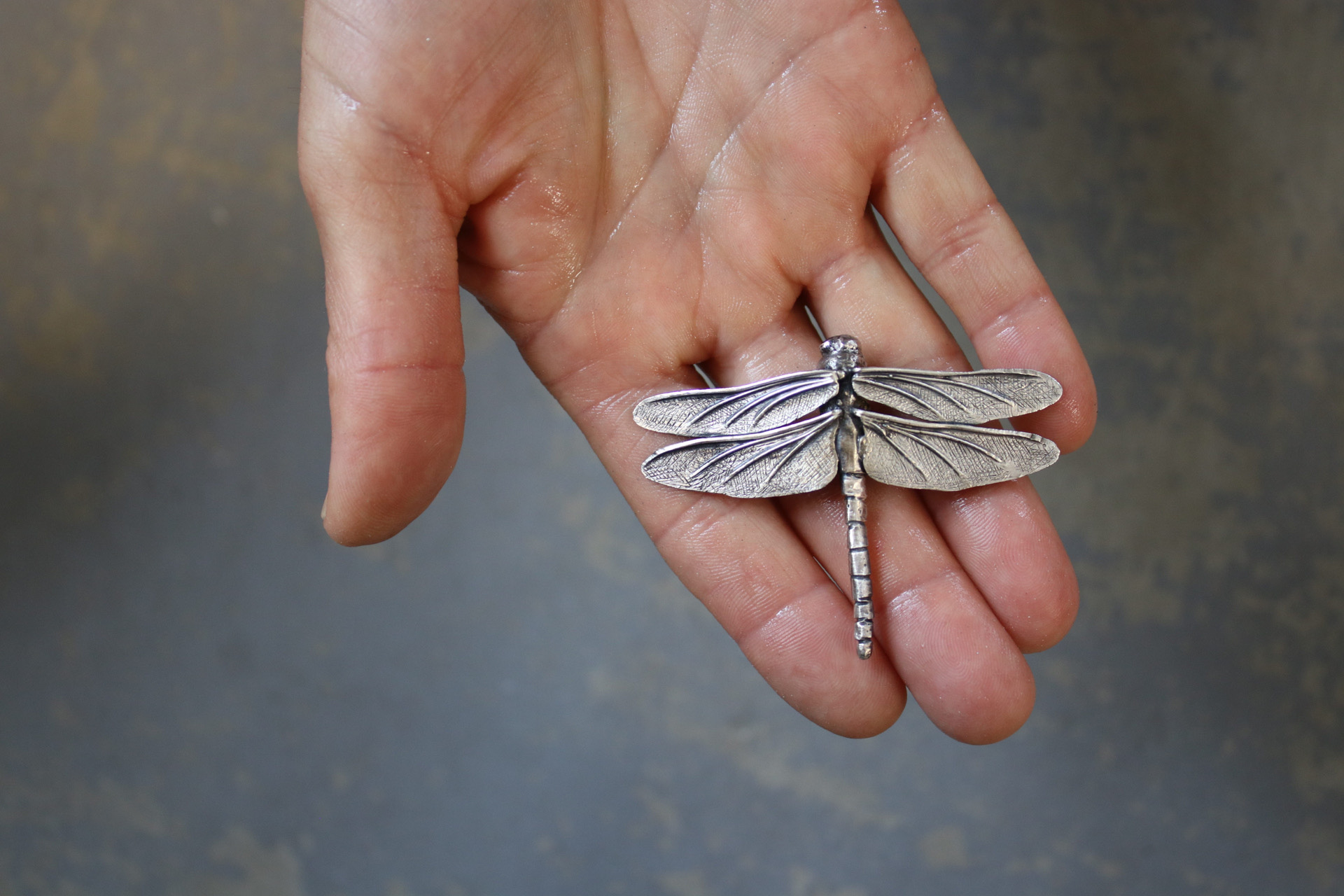
Fortunately a local greenhouse opened its doors to me, an ideal space for my new silversmithing studio. With abundant natural light and year-round plants growing in all corners, I never experienced a lack of inspiration. Every day that I entered my studio I found new inspiration: a dragonfly, butterfly, croaking frog, ladybugs, and a plethora of plants.
After the fire my husband and I purchased a small home and, thankfully, I received a grant from CERF+ to help with the reinvestment in tools and equipment. I quit my job and dove head first into silversmithing. To say it was a challenging first year is an understatement. While juggling the logistics of home insurance, renewing passports, birth certificates, repurchasing clothes, home furnishings, and getting ourselves back on our feet, I was struggling to find my voice as an artist. I couldn’t figure out how to set myself apart from the millions of other jewelry artists selling online, sharing their work on Etsy, Pinterest, and other social media platforms. We all seemed to be making similar pieces and pursuing the same market. Even though my work was selling I went into debt. I entertained the idea of building a wholesale business, but was daunted by the world of wholesale shows and bulk orders. I began to spiral. In the fall of 2015 I shut down my Etsy shop and Pinterest account and took several days to hike, breathe, and collect my thoughts.
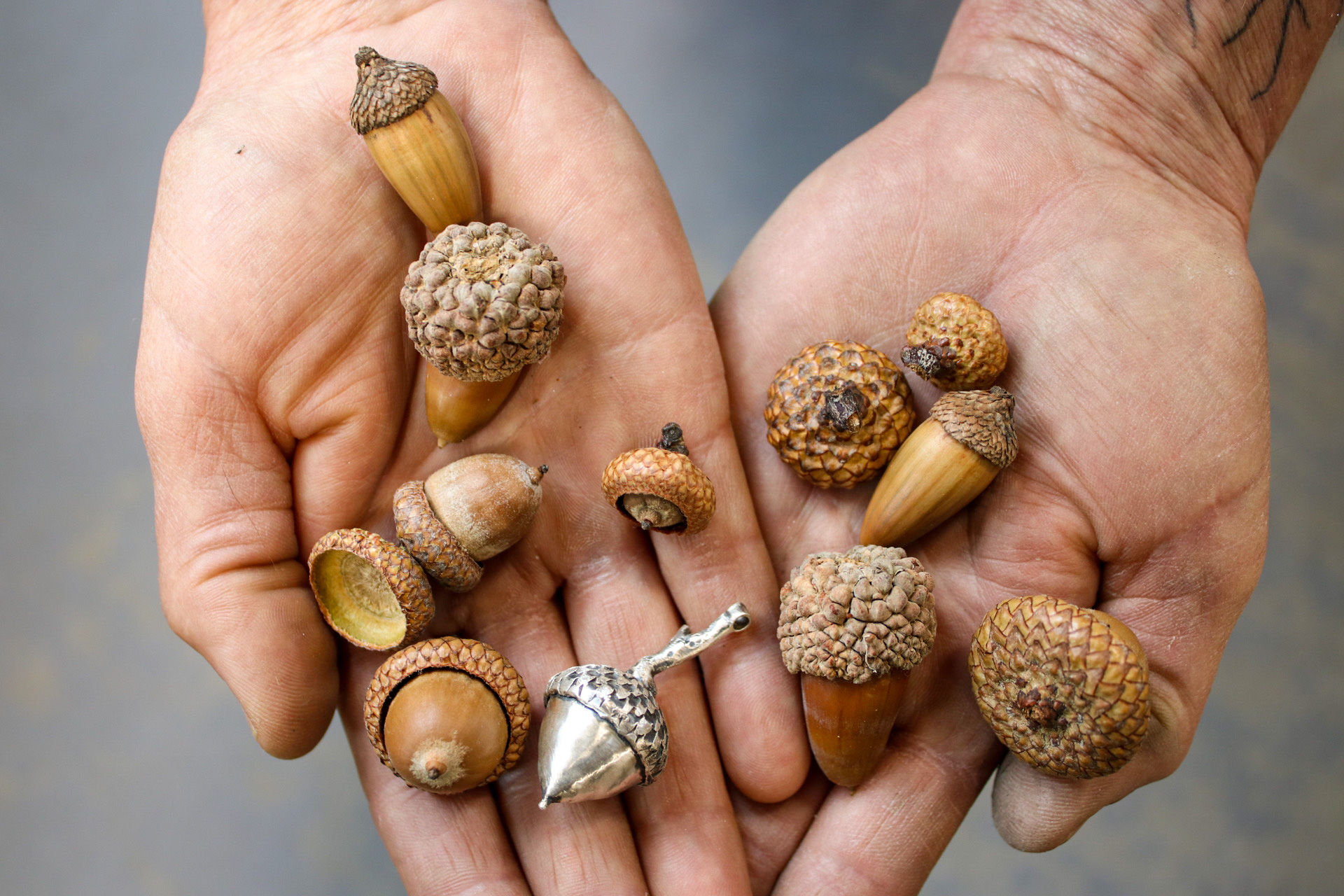
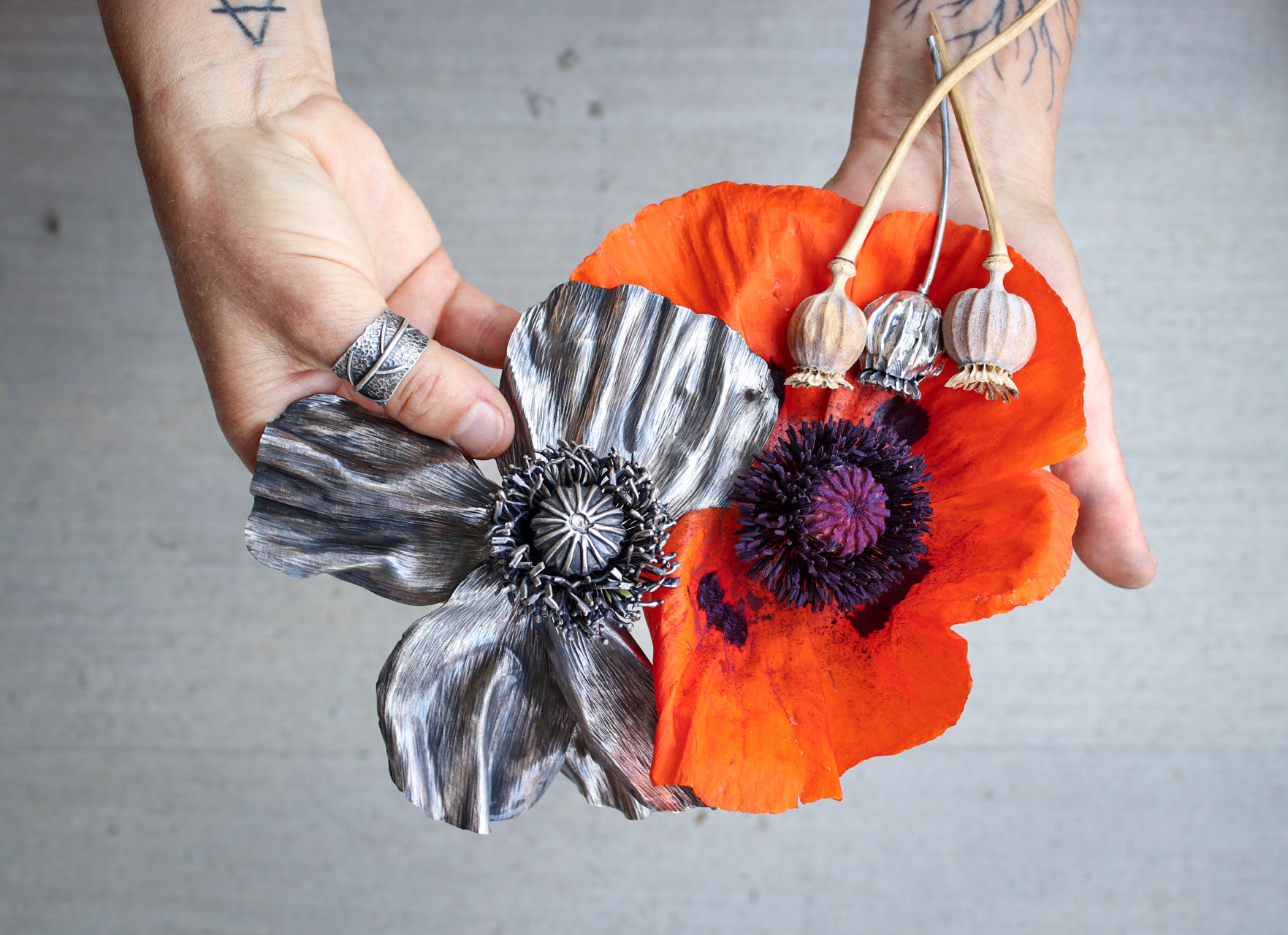
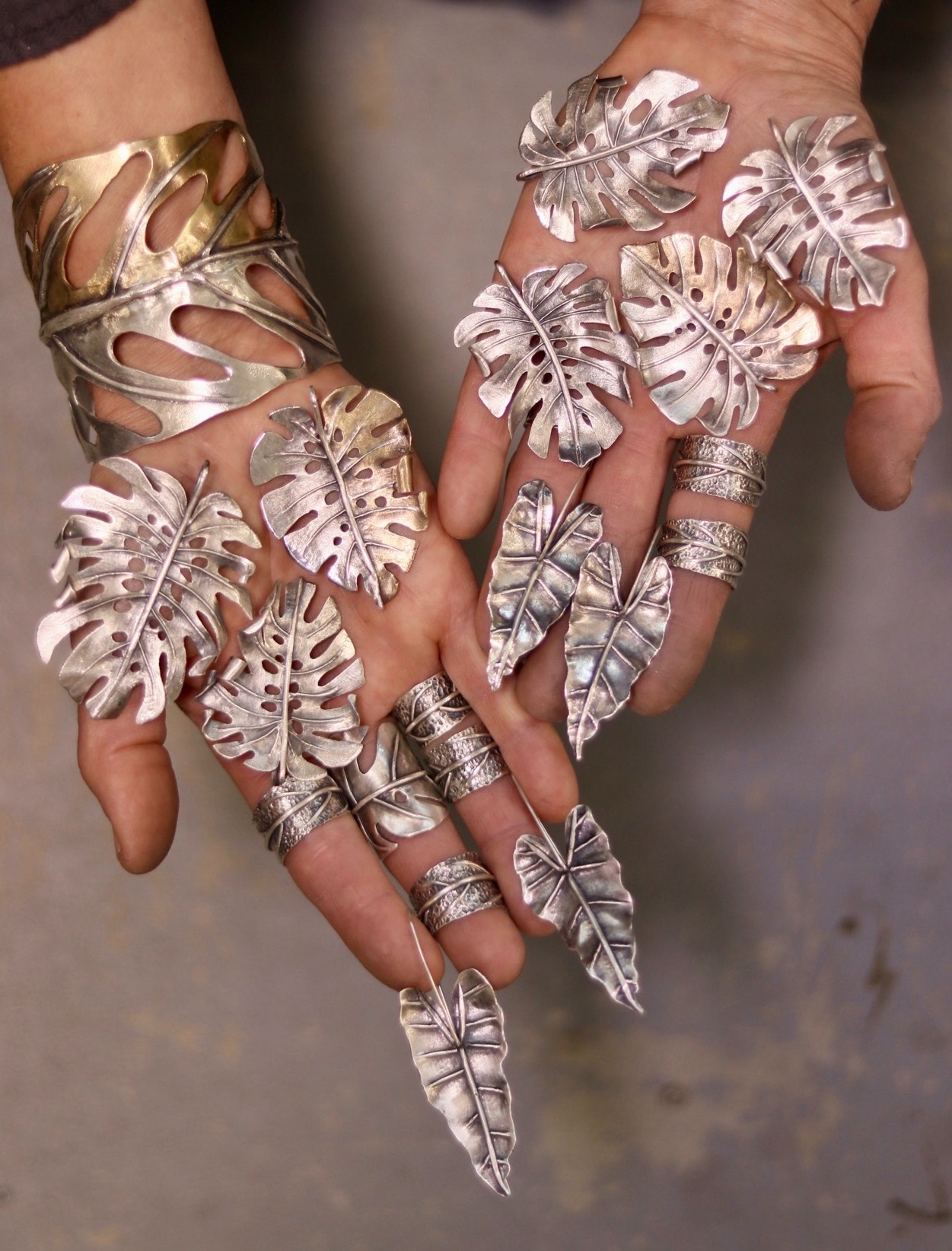
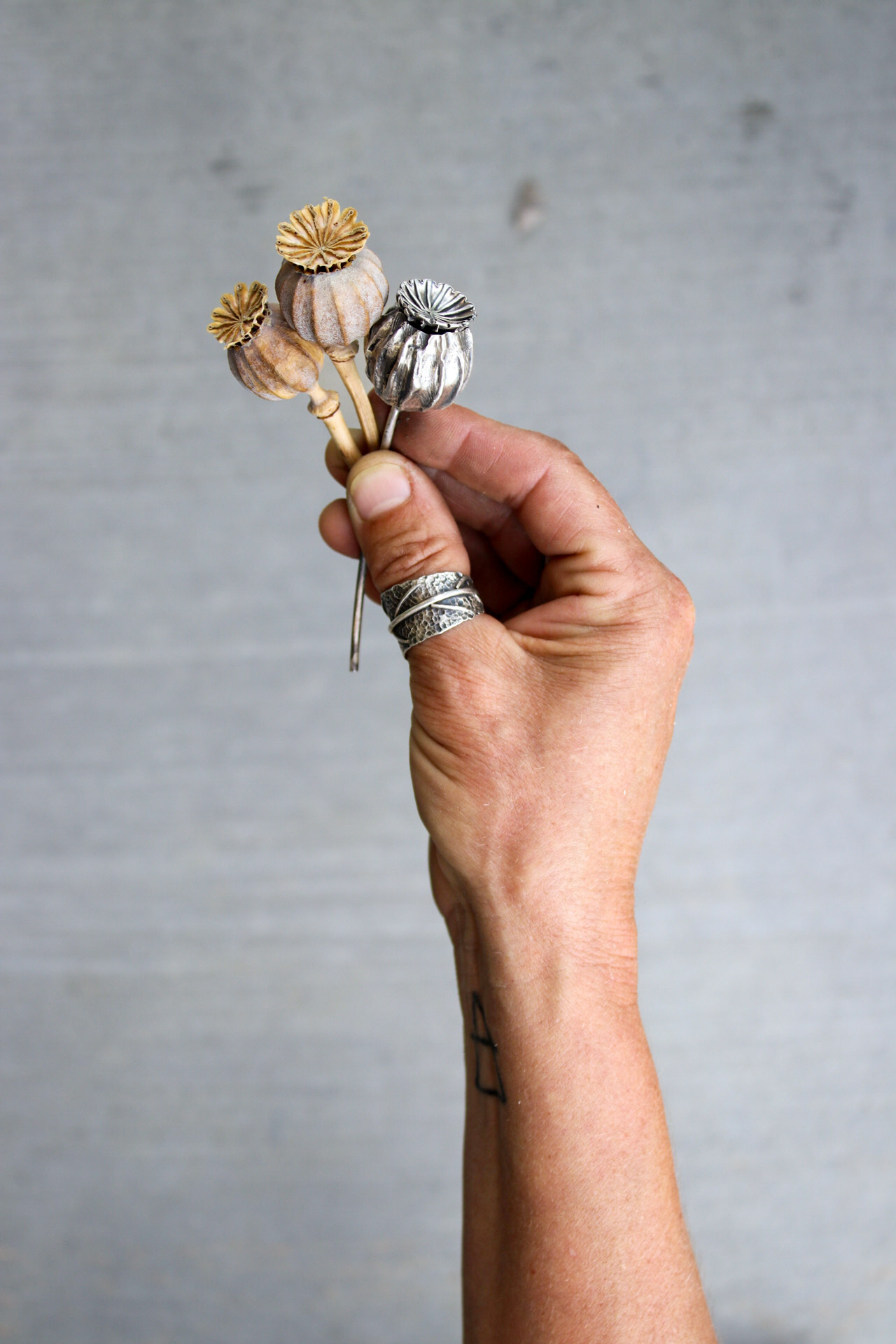
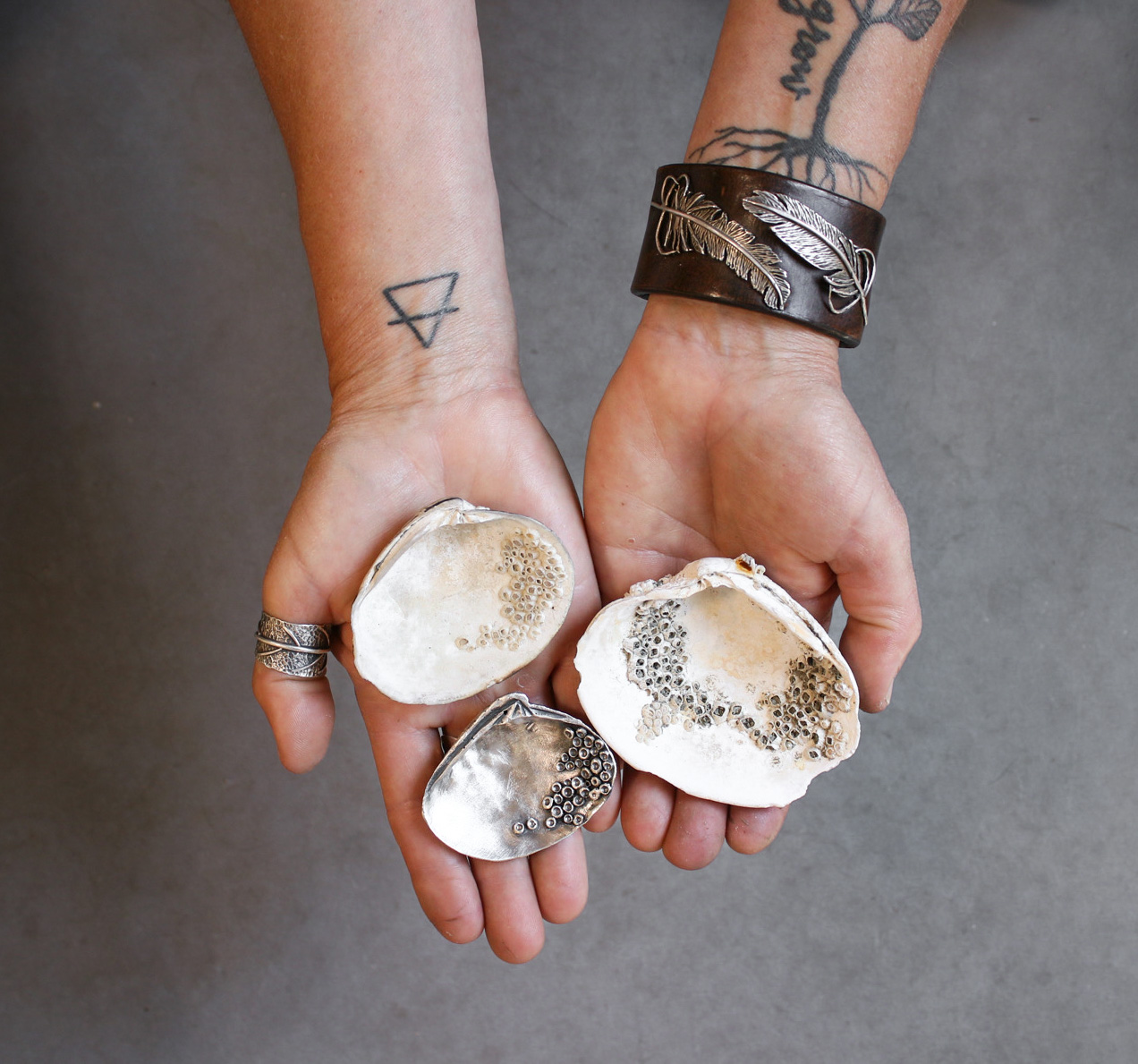
While I was trail running it dawned on me: I was going to create botanicals in silver. I had seen countless cast plants incorporated into jewelry designs, but never had I seen hand-fabricated plant jewelry. To build the skill set required, I challenged myself to make 30 botanicals. I spent the next three months dissecting 30 different plants and recreating them in silver. By doing so I improved my soldering skills, learned how to form and manipulate metal, and discovered so many out-of-the-box techniques. I opened a website, joined Instagram, and my work finally caught the attention it needed to establish myself as a notable artist.
I have now been a full-time silversmith for 8 years. I continue to push and challenge myself, and I thoroughly enjoy teaching and sharing the skills I have mastered. I hope to continue traveling widely to teach and inspire aspiring silversmiths, sharing these three messages: First, there is no one way to teach or to learn. Second, try things for yourself before you believe in impossibilities. And third, it is, in fact, possible to make a comfortable living as an artist.
I’m sure it wasn’t obstacle-free, but would you say the journey has been fairly smooth so far?
For the most part, my journey has been a relatively smooth one, though like any creative path, it hasn’t been without its challenges.
One of the more recent struggles has been navigating the rapidly changing landscape of social media. Platforms like Instagram have shifted in ways that make it harder for artists to share their work organically with the audiences they’ve built over time. Even with a following of more than 190,000 people, there’s no guarantee that those supporters will actually see what I post.
As a result, artists now have to think not only about making meaningful work, but also about creating additional visual content designed to stop someone mid-scroll. In many ways, it doubles the daily workload—balancing studio practice with the demands of digital visibility. It can be frustrating at times, but it has also pushed me to think creatively about how I present my work and connect with people.
Alright, so let’s switch gears a bit and talk business. What should we know about your work?
I’m a silversmith, author, and instructor known for creating highly detailed, nature-inspired jewelry that is entirely hand fabricated from sheet and wire. Much of my work explores botanical forms—leaves, flowers, insects, and small creatures—and translating those delicate structures into metal. What makes my work somewhat unusual is that I fabricate everything from scratch rather than casting or electroforming, and over the years I’ve developed my own approaches to fusing sterling silver that allow me to build sculptural and even kinetic pieces.
My path to this work wasn’t traditional. I grew up between the United States and Europe, served in the Peace Corps in West Africa, and spent many years directing nonprofit organizations before fully stepping into art. When my husband and I moved to the North Cascades, I began incorporating natural elements into our home—drilling river rocks for cabinet knobs, which eventually led me to jewelry making. What started with wire wrapping gradually evolved into torch work, and in 2011 I bought my first Smith Little Torch and began teaching myself metalsmithing through experimentation and persistence.
A pivotal moment came after a wildfire destroyed our home and studio in 2014. Instead of rebuilding the same life, my husband encouraged me to take the leap and pursue art full time. That period forced me to find my own artistic voice. I began studying plants intensely—taking them apart, examining their structures, and figuring out how to fabricate them in silver. That exploration really shaped the direction of my work.
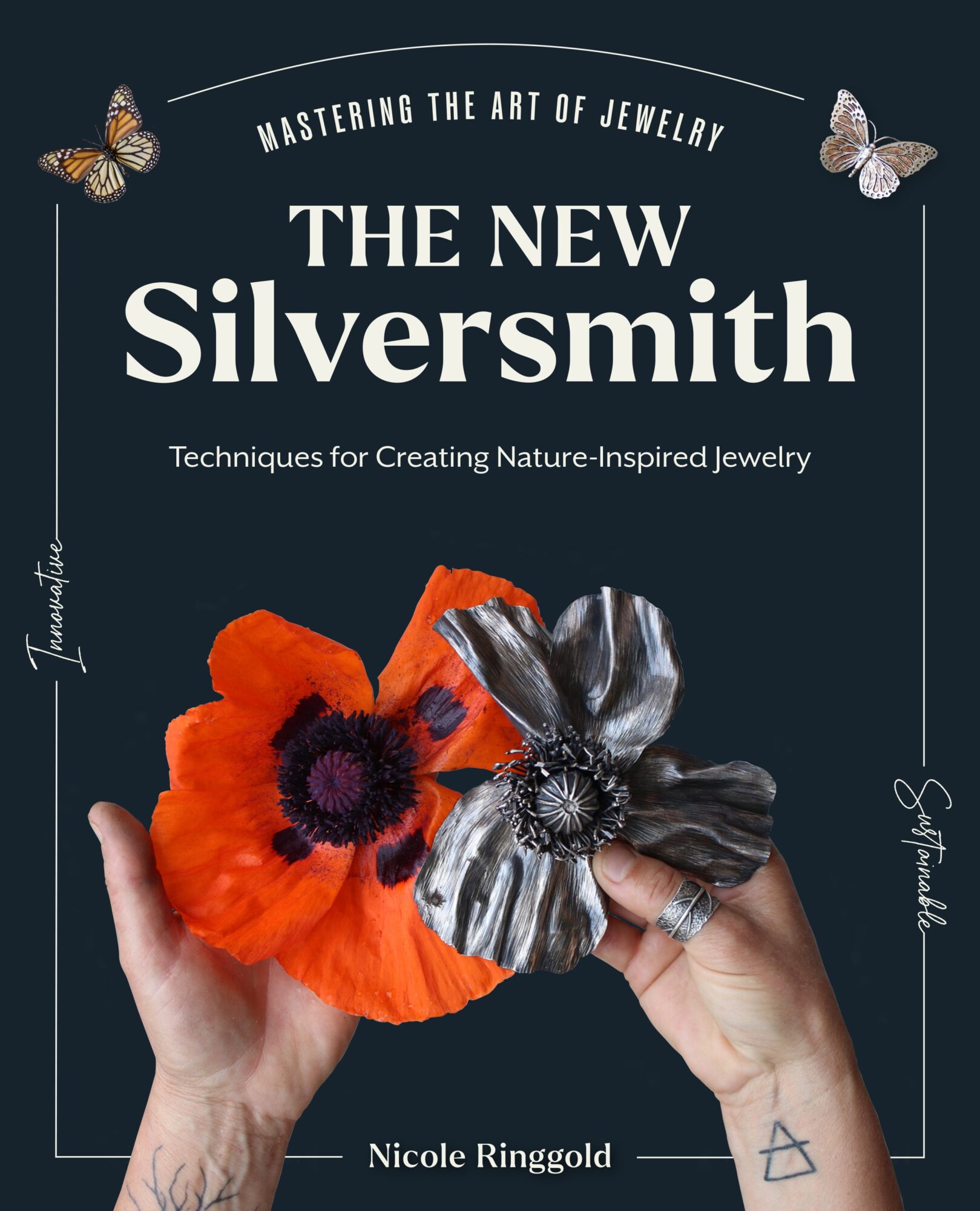
Over time I’ve also become passionate about teaching and sharing techniques that make metalsmithing more accessible and less chemically intensive. That eventually led to writing The New Silversmith, which has reached thousands of makers around the world. Collaborating with my daughter, who photographed the book, was especially meaningful.
What I’m most proud of is building a creative life that combines making, teaching, and sharing knowledge with others. I love pushing the boundaries of what fabricated silver can do—whether that’s a kinetic bat with moving wings or a tiny botanical piece that captures something fleeting in nature. At the heart of it all, my goal is to help people see the natural world a little more closely and realize that with patience and curiosity, you can teach yourself to create almost anything.
Let’s talk about our city – what do you love? What do you not love?
What I love most about Winthrop is how deeply the landscape shapes daily life. Living in the Methow Valley means being surrounded by the North Cascades—towering mountains, open skies, rivers, wildlife. The seasons are vivid here. In winter we have some of the most beautiful cross-country skiing in the country, and in summer the trails and rivers pull everyone outside. That constant relationship with the natural world is incredibly grounding, and it also directly inspires my work as an artist. Much of what I create in silver—leaves, insects, small creatures—comes from simply paying attention to what’s around me here.
What makes the place even more special is the community. It’s a small town where people genuinely know and support one another. There’s a strong spirit of creativity and independence that I find really inspiring.
Of course, mountain towns also come with challenges. In recent years wildfire and smoke have become a difficult part of summer, and the housing shortage in the valley makes it hard for many people who work here to afford to live here. Those are real concerns for the future of the community.
But despite those challenges, it’s an extraordinary place to live. The combination of wilderness, creativity, and community makes it a place that continually feeds both my life and my work.
Contact Info:
- Website: https://www.nicoleringgold.com
- Instagram: https://www.instagram.com/ringgoldnicole/
- Facebook: https://www.facebook.com/ringgoldnic/
- Youtube: https://www.youtube.com/@ringgoldnic