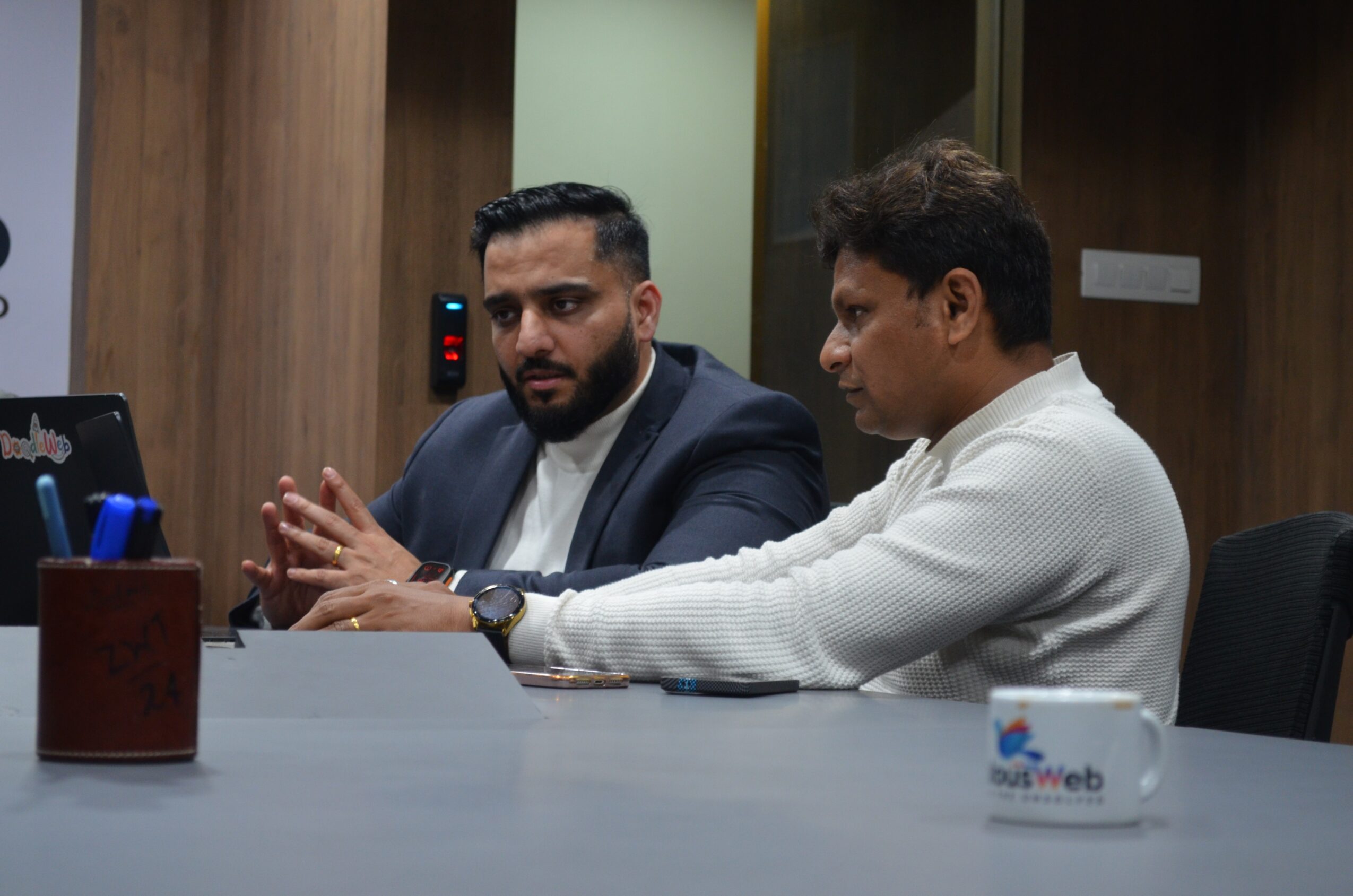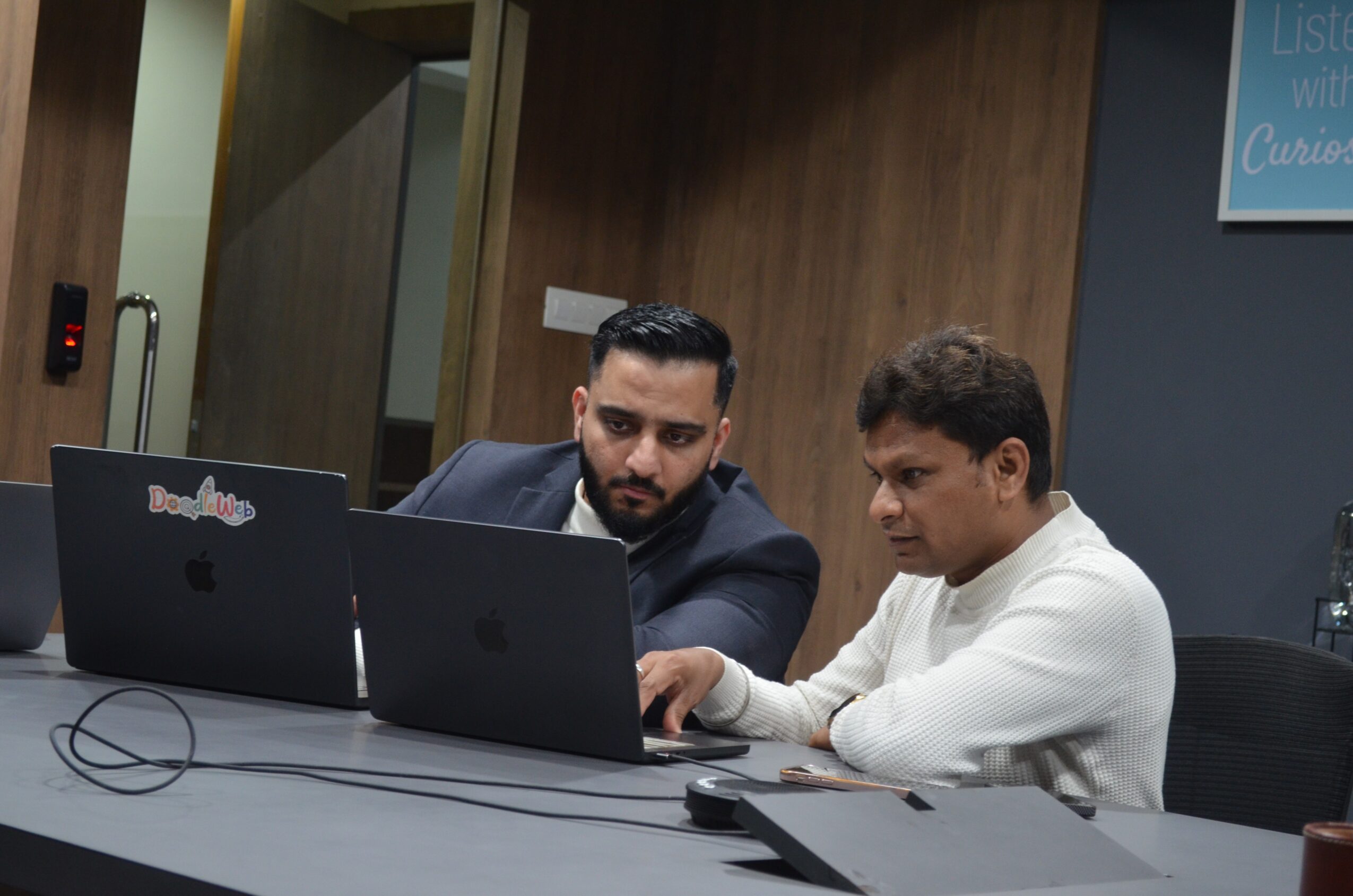






Today we’d like to introduce you to Chandan Sharma.
Hi Chandan, thanks for joining us today. We’d love for you to start by introducing yourself.
My story starts with code and ends with a leap of faith.
I spent over a decade as a developer and technical lead at digital agencies across North America, building large-scale websites on Drupal and other platforms for universities, government, and enterprise clients. I got very good at the craft. But everywhere I went, I kept noticing the same thing: great agencies, great people, and clients who still felt handed off, over-scoped, or sold things they didn’t need. It bothered me. I’d come home and vent about it, sketch out how I’d do things differently, then go back to work the next morning and do nothing about it.
My wife Kamal was the one who finally called my bluff. She’d heard the “if it were my agency” speech enough times, and one day she simply said: so make it your agency. In 2019, we stopped talking and started building. That became DoodleWeb.
I couldn’t have done it without her, and honestly, I wouldn’t have wanted to. Kamal isn’t just the person who pushed me off the ledge; she jumped with me. As co-founder, she brought everything I didn’t have: the steadiness when the early months were lean, the instinct for people and relationships, and the ability to see the business from the client’s side of the table while I was buried in the technical side. Where I see architecture and code, she sees trust and communication. That balance became the DNA of the company.
We began with one simple bet: do honest work, communicate like a human, and clients will stick around. They did. Today DoodleWeb is a full-service digital agency headquartered in Seattle’s Columbia Tower, working across Drupal, WordPress, Webflow, and Shopify. We’ve grown into municipal and government projects, higher education, and white-label development for other agencies who trust us to build behind the scenes.
Then AI changed everything, and we ran toward it instead of away from it. We built SiteSonar, a tool that shows businesses exactly how visible they are in AI search engines like ChatGPT and Perplexity, because the old rules of SEO are collapsing and most companies have no idea where they stand. We also became a Certified Lovable Solution Partner, using AI-assisted development to build faster without cutting corners. Somewhere along the way, we stopped being just a web agency and became a guide for businesses navigating a completely new digital world.
Off the clock, Kamal and I recently bought a home in Snohomish County that we’re renovating ourselves. Building a company and building a house have taught me the same lesson twice: good foundations matter, and nothing worthwhile happens without patience and the right partner.
Can you talk to us a bit about the challenges and lessons you’ve learned along the way. Looking back would you say it’s been easy or smooth in retrospect?
Smooth? Not even close. But I don’t think any road worth taking is. The first struggle was internal. Walking away from a stable career with a good title to start from zero is terrifying, no matter how confident you sound at dinner parties. And here’s the thing people don’t always appreciate: taking risks is easy when you’re young and single, when the worst case is moving into a cheaper apartment and eating instant noodles. We didn’t have that luxury. Kamal and I took this leap as parents, with kids at home, school expenses, family obligations, and all the very real costs that come with raising a family. There was no safety net and no version of failure that only affected us. Every decision carried the weight of the people depending on us. Looking back, that pressure is exactly what kept us disciplined, focused, and hungry, and it made the payoff mean so much more. We didn’t just build a business; we proved to our kids that you can bet on yourself responsibly and win.
Beyond that, the early days were a grind. When you’re a new agency, you’re asking people to trust you with something very visible, their website, their brand, often their biggest marketing investment of the year. Nobody wants to be your first client. Earning those early yeses took patience and a willingness to over-deliver on small projects until the small projects became big ones.
The second struggle was learning that being great at the work isn’t the same as being great at running a business. I came up as a developer. Pricing, proposals, cash flow, hiring, chasing invoices, none of that comes with an engineering background. I had to learn sales the hard way: by losing deals I should have won, underpricing work I shouldn’t have, and slowly figuring out that clients don’t buy code, they buy outcomes and trust.
Then there’s the nature of agency life itself. It’s feast or famine if you let it be. One quarter you’re turning work away, the next you’re staring at the pipeline wondering what happened. Building a steady, diversified base, direct clients, government work, white-label partnerships with other agencies, took years of deliberate effort, and honestly it’s a discipline we still practice every single week.
And just when we felt like we’d figured out the playbook, AI tore it up. Search is changing, the way websites get built is changing, and clients are anxious about all of it. That could have been an existential threat for an agency like ours. We chose to treat it as the biggest opportunity we’ve ever had, and building SiteSonar came directly out of that moment. But make no mistake, reinventing your own industry while running client work full-time is not a relaxing experience.
If there’s a theme to all of it, it’s this: every struggle forced us to become something better than what we were before. I wouldn’t trade any of them.
Great, so let’s talk business. Can you tell our readers more about what you do and what you think sets you apart from others?
DoodleWeb is a full-service digital agency headquartered in Seattle’s Columbia Tower. At our core, we design, build, and grow websites, but the honest answer to “what do you do” is this: we help organizations turn their website from a brochure into their hardest-working employee.
We specialize in the platforms that power serious digital work: Drupal, WordPress, Hubspot, Webflow, and Shopify. That range is deliberate. Instead of forcing every client into the one platform we happen to sell, we recommend the right tool for their goals, budget, and team. It’s why our client list is so varied, from city governments and higher education institutions to e-commerce brands and growing businesses. We’ve become especially known for municipal and government website work, where accessibility, security, and public trust aren’t nice-to-haves, they’re the whole job.
There’s also a side of our business most people never see: white-label development. Other agencies across the country bring us in behind the scenes to build for their clients. I love that part of our work because it’s the ultimate compliment. When agencies, who know exactly what good work looks like, choose you as their build partner, it says something no marketing copy ever could.
What truly sets us apart right now is how early we went all-in on AI. While much of our industry was debating whether AI search mattered, we built SiteSonar, our own product that shows businesses exactly how visible they are when people ask ChatGPT, Perplexity, and other AI engines for recommendations. Search behavior is shifting faster than at any point since Google arrived, and most companies are flying blind. We give them the instruments. We’re also a Certified Lovable Solution Partner, using AI-assisted development to deliver projects faster without sacrificing craftsmanship. Our own website, all several hundred pages of it, is built that way. We don’t just sell the future; we run our own business on it.
But if you ask me what I’m most proud of brand-wise, it isn’t a technology or a credential. It’s that our growth has come almost entirely from relationships: clients who stay for years, referrals, and partners who keep coming back. We built DoodleWeb on a simple promise, do honest work and communicate like a human being, and we’ve never had to abandon it to grow.
What I’d want readers to know is this: whether you’re a city modernizing its website, a business trying to understand why AI chatbots never mention you, or an agency that needs a build partner it can trust, that’s exactly the work we love. Find us at doodleweb.io, or check your own AI visibility at sitesonar.ai. Fair warning: the results surprise almost everyone.
Networking and finding a mentor can have such a positive impact on one’s life and career. Any advice?
Here’s the updated version with Jason woven in:
I’ll be honest: for a long time I thought I never had a formal mentor, and that I was doing it wrong. What I eventually realized is that mentorship rarely shows up as one wise person taking you under their wing. It shows up as people who teach you crucial things, if you’re paying attention.
For me, the person who shaped me most was Jason Seigel, my boss during my time at Bluetext. Working alongside him was a masterclass I didn’t even realize I was enrolled in. His grind was relentless, his determination to do the best work in the room was non-negotiable, and his attention to detail bordered on obsessive, in the best possible way. Nothing went out the door that wasn’t right. But what stuck with me just as much was his work hard, play hard attitude. He showed me you could push for excellence without losing your humanity or your sense of fun, and that the two actually feed each other. A lot of how I run DoodleWeb today, the standards, the hustle, the refusal to ship anything mediocre, traces straight back to watching him operate. I don’t think he ever sat me down and said “let me mentor you.” He just did the work at a level that made everyone around him better. That’s the best kind of mentor there is.
Beyond Jason, my other “mentors” were the people I worked alongside for over a decade in agency life: project managers who showed me how to communicate with clients, salespeople who let me sit in on calls, founders whose mistakes I quietly took notes on. My advice is to stop searching for a mentor and start extracting lessons from everyone already around you. Ask the person who’s great at something how they do it. Most people are surprisingly generous when you ask a specific question and genuinely listen to the answer.
On networking, the biggest shift for me was realizing that networking isn’t about meeting people, it’s about being useful to people. Early on, I did the usual things: events, LinkedIn, coffee chats, and most of it went nowhere, because I was showing up asking “what can I get?” Everything changed when I flipped it. Now, when I reach out to someone, I lead with something of value: an observation about their website, a resource, an introduction, a pattern I’ve noticed in their industry. No pitch, no pressure. Just: here’s something I thought might help you.
That philosophy is baked into how we do business development at DoodleWeb. We never “just check in” with anyone. Every follow-up carries an insight or something worth their time. And we always try to create safety in conversations, meaning we make it easy for people to say no. Counterintuitively, the less pressure you apply, the more people want to work with you.
The other thing that’s worked incredibly well for us: partnerships over transactions. Some of our best growth has come not from chasing individual clients but from building relationships with other companies, agencies that white-label through us, primes that bring us into government bids, platforms whose ecosystems we’ve invested in. One good partnership can be worth a hundred cold emails.
And finally, play the long game. Some of our biggest projects came from people I’d known for years before any business happened, former colleagues, an old contact who remembered a conversation, someone I’d helped once with no expectation of return. Relationships compound like interest. Plant seeds constantly, water them with genuine usefulness, and don’t keep score. It pays off in ways you can never predict.
Pricing:
- Free AI visibility scan – See how your business shows up in ChatGPT and Perplexity at sitesonar.ai
- SiteSonar monitoring – Plans start at $99/month, with full AI search visibility from $499/month
- Website projects – Custom scoped; most engagements range from focused builds to enterprise platforms
- Ongoing support & growth retainers – Flexible monthly plans tailored to your team’s needs
- Free consultation – Book a no-pressure discovery call at book.doodleweb.io
Contact Info:
- Website: www.doodleweb.io
- Instagram: https://www.instagram.com/doodleweb
- Facebook: https://www.facebook.com/doodlewebinc
- Linkedin: https://www.linkedin.com/company/doodle-web/
- Youtube: https://www.youtube.com/@DoodleWebInc
- Other: https://www.drupal.org/doodle-web-inc