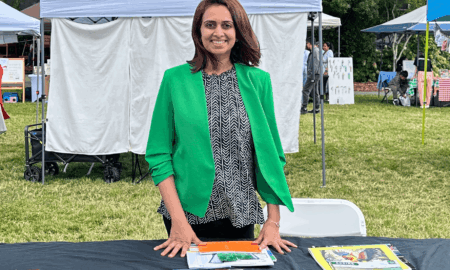





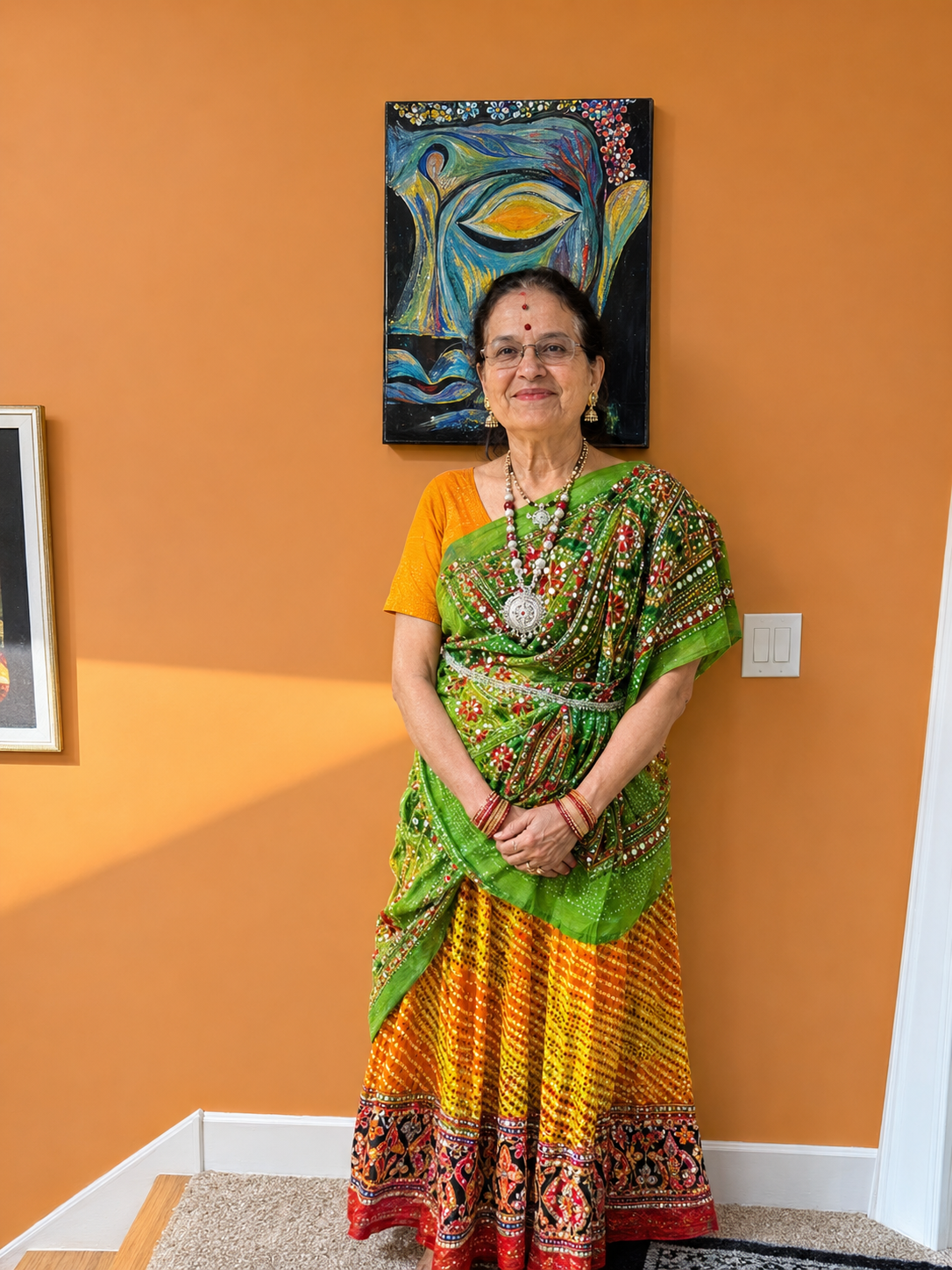
Today we’d like to introduce you to Nomita Paul.
A decade-long family journey through late-life mental illness ultimately inspired a Kent woman to create the kind of adult family home she once desperately wished she could find.
Ten years ago, Nomita watched her mother slowly become someone she no longer recognized.
At 70, her mother began forgetting things. She would say things that seemed unusual or silly. At first, the changes were subtle and harmless enough that the family wondered whether they were simply signs of aging. They went to a neurologist, concerned about dementia. The testing came back negative.
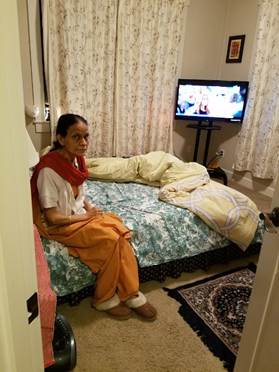
Then came primary-care appointments, specialists and more testing. There was no obvious head injury, neurological disease or other explanation. Yet the changes continued. Over time, forgetfulness became confusion. Confusion became agitation and pacing. Her mother began withdrawing from activities she once enjoyed.
Eventually she stopped wanting to eat. She stopped showering. She began throwing away medications. And still, no one seemed able to tell the family exactly what was happening.
“I thought depression meant someone was sad or suicidal,” Nomita said. “I had no idea that in an older person it could look like memory problems, confusion, agitation, loss of appetite and completely losing interest in taking care of yourself.”
Mental illness was not entirely unfamiliar to the family. Nomita’s father had lived with schizophrenia, so when her mother’s behavior became increasingly unusual, she even wondered whether she was witnessing late-onset schizophrenia.
For nearly three years, the family moved from one provider to another. The final year was the worst.
Her mother became nearly nonverbal and increasingly dependent on others for basic care. Her weight eventually dropped to about 90 pounds. A caregiver had to be hired because she could no longer safely be left alone.
Every time her mother stepped on the scale, Nomita felt her heart race.
“I kept thinking, there has to be something terminal that everybody is missing,” she recalled. At one point, hospice was even suggested.
But Nomita could not accept that a woman without a terminal diagnosis should simply continue refusing food and slowly fade away. At the same time, she was raising young children and working full time in a management position with a promising career ahead of her. Eventually, something had to give.
She left her job.
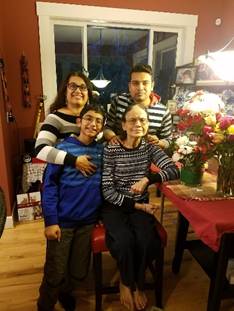
The experience became a family responsibility. Her children saw their grandmother at her most vulnerable and began helping in small ways.
One morning, Nomita found her 7-year-old son standing on a stool, getting cereal from a cabinet, adding milk, warming it and feeding his grandmother.
She had never asked him to do it.
When she asked why, his answer stayed with her.
“I want to help so you have one less thing to stress about before driving us to school.”
For Nomita, it remains one of the unexpected lessons that came out of an otherwise devastating period: her children learned compassion by living it.
A Chance Conversation Changed Everything
After years of failed medications and growing desperation, a family friend casually mentioned an elderly relative who had responded to electroconvulsive therapy, or ECT.
Nomita began searching for a psychiatrist experienced with the treatment.
The first appointment she could get was two months away.
“They were probably the longest two months of my life,” she said.
Her mother was surviving largely on nutritional drinks.
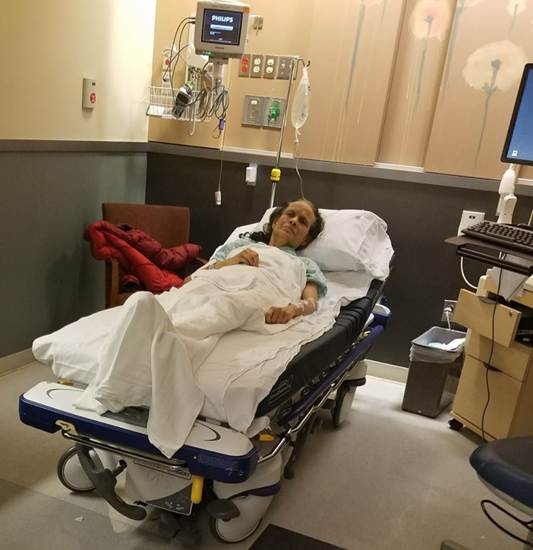
When the psychiatrist finally evaluated her, he diagnosed treatment-resistant depression with psychotic features and recommended ECT.
The treatment was expensive, and insurance had not yet begun covering the costs.
Each session cost approximately $3,500 out of pocket.
Nomita borrowed against her retirement savings to pay for it.
Before treatments, she signed consent documents acknowledging the risks associated with the procedure and anesthesia.
“It broke my heart every time,” she said. “But we were out of options.”
Then came another test of her resolve.
Six treatments passed.
Nothing changed.
She began questioning everything.
Was she putting her mother through this for nothing? How many more treatments could
the family afford? At what point did persistence become denial?
“Do I keep going? When do I give up?” she remembers asking herself.
She kept going.
After the 12th treatment, something happened that she still describes as almost surreal.
Her mother woke from anesthesia and began asking questions.
Why was she so thin?
Why was she in a hospital?
To Nomita, it felt as though the terrible final year had vanished from her mother’s
memory.
“It was like her brain had been rebooted,” she said.
Recovery continued in the weeks that followed.
Her mother began eating. Talking. Going outside. Laughing.
And then Nomita realized something even more remarkable.
She had not merely gotten her mother back.
“I got a happier, chirpier version of my mom,” she said.
She watched her mother laugh at jokes, socialize freely and dance at weddings.
It was a version of her she had not remembered seeing for roughly two decades, since
the death of Nomita’s father when her mother was only 50.
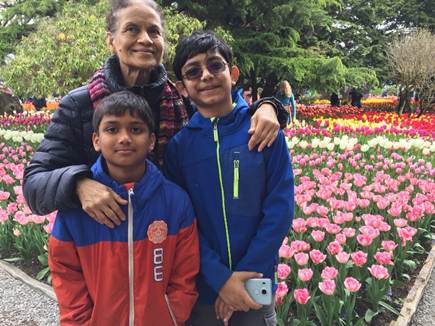
Today, at 81, her mother is living independently.
Recently, she even performed in an India Independence Day dance recital.
“She was impressive,” Nomita said.
Her mother has also transformed her experience into advocacy, becoming involved with
NAMI, sharing her story and helping others understand that serious mental illness does
not necessarily mean the end of an independent, meaningful life.
“Nobody Else Should Have to Go Through This Alone”
The experience changed Nomita permanently.
She had learned how difficult the mental-health system could be to navigate even for an educated, determined family.
Long waits for psychiatric appointments sometimes stretched for months. Insurance and immigration status limited some of the resources available to her mother. Private-pay options were financially daunting.
At one point, a social worker evaluated whether her mother might require involuntary hospitalization.
Because her mother had become largely nonverbal, Nomita was terrified.
“What if she gets institutionalized and she cannot even advocate for herself?” she remembers thinking.
What she wished for during those years was not simply another facility.
She wanted someone who understood what the family was experiencing. Someone who could recognize changes in behavior, communicate effectively with medical professionals and continue searching for solutions when the person receiving care could no longer advocate for themselves.
“I never want another family to feel isolated and helpless the way my family did,” she said.
Years later, that belief would find a home.
An Unexpected Calling in Kent
In December 2025, Nomita purchased Radiance Adult Family Home in Kent.
She did not intentionally set out to specialize in behavioral or mental-health challenges.
But when she took over, four of the five existing residents were living with conditions that included schizophrenia, dementia or both. Another had significant physical-care needs.
It felt almost serendipitous.
As she began caring for the residents, Nomita realized that the hardest years of her own life had prepared her for this work.
Behaviors that might frighten or frustrate someone else did not frighten her in the same way.
She had seen what severe mental illness could do to someone she loved.
More importantly, she had seen that the person could still be there underneath it.
Her philosophy became simple.
“Never, never, never get angry at the resident,” she said. “If you feel angry or frustrated, hate the disease. Hate our inability to cure it. Don’t hate the person.”
She tells caregivers that behind confusing or challenging behavior may still be the same
loving, gentle person their family has always known.
“They cannot always help themselves,” she said. “That is why we are here.”
Looking for the Person Behind the Behavior
At Radiance, changes in behavior are treated as information.
If someone suddenly becomes more agitated, withdrawn, confused or unlike their usual self, caregivers document what changed, look for possible triggers and note what interventions appear to help.
The goal is to intervene before a small change becomes a crisis.
When necessary, the home communicates those observations to families and the resident’s healthcare team so medications, routines, environment or care plans can be reassessed.
Hospitalization, in Nomita’s view, can sometimes be necessary for stabilization or closer medical observation—but should not automatically be the first response simply because someone has become more difficult to care for.
She knows what families often fear when a loved one deteriorates.
“They think, ‘This is permanent. It is only going to get worse,’” she said. “And when they are already at their own wit’s end, they wonder: Is anybody else going to care enough to keep trying?”
That is the question Radiance is designed to answer.
A Place to Live, Not a Place to Be “Put”
Radiance is intentionally small, with space for six residents.
Nomita wants it to feel less like entering a facility and more like returning home—just with different family members living there.
Meals are not dictated indefinitely by a menu printed months earlier. Residents are asked what they would like to eat, and preferences are continually updated. When one resident wanted cod, the ingredients were ordered so the caregiver could prepare it.
Residents who use wheelchairs can still go shopping and choose groceries or personal
items when appropriate.
Televisions and radios are tuned to programs they enjoy.
Residents also participate in activities based on their abilities and interests. A regular activities provider visits the home, some residents attend adult day programs, and Nomita incorporates creative and sensory experiences such as music, calming scents, art and hands-on projects.
Painting has become one of the activities she especially enjoys doing with residents. Together they create traditional paintings as well as colorful pour paintings, and some of the finished artwork is displayed on the walls of the home.
Nomita also makes jewelry with some of her residents.
She is currently pursuing additional training related to sound-based wellness practices, but her focus today is straightforward: finding safe, enjoyable activities that give residents opportunities to create, participate and connect with others.
Families remain part of the care process, and residents may have multidisciplinary healthcare teams involved in their care.
Some Radiance residents participate in Providence PACE, allowing coordination with professionals such as doctors, nurses, dietitians, physical therapists and occupational therapists.
The smaller setting also makes subtle changes easier to notice.
Sometimes the intervention is medical.
Sometimes it is environmental.
Sometimes it may be changing a routine, reducing stimulation in a private room, playing familiar music, offering a warm bath, sitting beside someone, holding a hand when welcomed or simply listening.
Dignity, Nomita says, also means respecting privacy and autonomy.
If someone refuses a service, caregivers should not automatically turn the interaction into a confrontation. They can step away, offer again later, coax gently and try to understand why the person is resisting.
When a person with dementia or psychosis describes something that does not match others’ perception of reality, she does not want caregivers humiliating them or trying to win an argument.
The first priority is often to understand the emotion underneath the experience and help
the person feel safe.
“She Feels Like Living Again”
One resident showed Nomita just how much patient, individualized care could change someone’s life.
As the resident’s dementia progressed, she developed severe hygiene and toileting difficulties and frequently refused assistance. By the time Nomita took over the home, the woman had become largely isolated in her room. The environment had become severely unsanitary, and she was no longer
participating in her outside day program.
Rather than accepting the situation as permanent, Nomita and her caregivers began slowly building trust.
They learned what motivated her.
Sometimes cooperation with a shower or hygiene care came with the promise of a favorite treat—a brownie, ice cream or a hot fudge sundae.
Her room was thoroughly restored. Her mattress was replaced. Caregivers established a routine she would tolerate.
Gradually, things changed.
She began leaving her room.
She was accepted back into her day program.
Visitors who remembered the condition of the home before were stunned by the difference.
But the most important change was not the room.
It was the resident.
She told Nomita that she “feels like living again.”
Later, her sister-in-law wrote that the team at Radiance had helped her “blossom again.”
For Nomita, that is what the work is about.
Not finding the easiest resident to care for.
Not defining someone by the worst episode of their illness.
And not giving up simply because progress is slow.
A Story That Has Come Full Circle
Perhaps the most meaningful part of Radiance’s story is that the woman who inspired it is still here to see it.
At 81, Nomita’s mother is proud of what her daughter has created.
She now wants to spend time with Radiance residents herself—talking with them, socializing and connecting with people who, in some cases, are her own age.
A decade ago, her family feared they might lose her.
Today, she can sit beside another person facing mental-health challenges and represent something Nomita desperately needed to believe during those three difficult years:
There can still be light at the end.
And sometimes, the person you fear you have lost is still there, waiting for someone patient enough to keep looking.
About Radiance Adult Family Home
Radiance Adult Family Home is a six-resident adult family home in Kent, Washington, providing individualized, 24-hour care in a small residential setting. Radiance is licensed to serve residents with mental-health needs, dementia and developmental disabilities, as well as individuals with combined behavioral and physical-care needs.
Radiance currently has openings for new residents.
Contact Info:
- Website: radianceadultfamilyhome.com
- Other: info@radianceadultfamilyhome.com
Suggest a Story: VoyageWashington is built on recommendations from the community; it’s how we uncover hidden gems, so if you or someone you know deserves recognition please let us know here.